 Skip to content
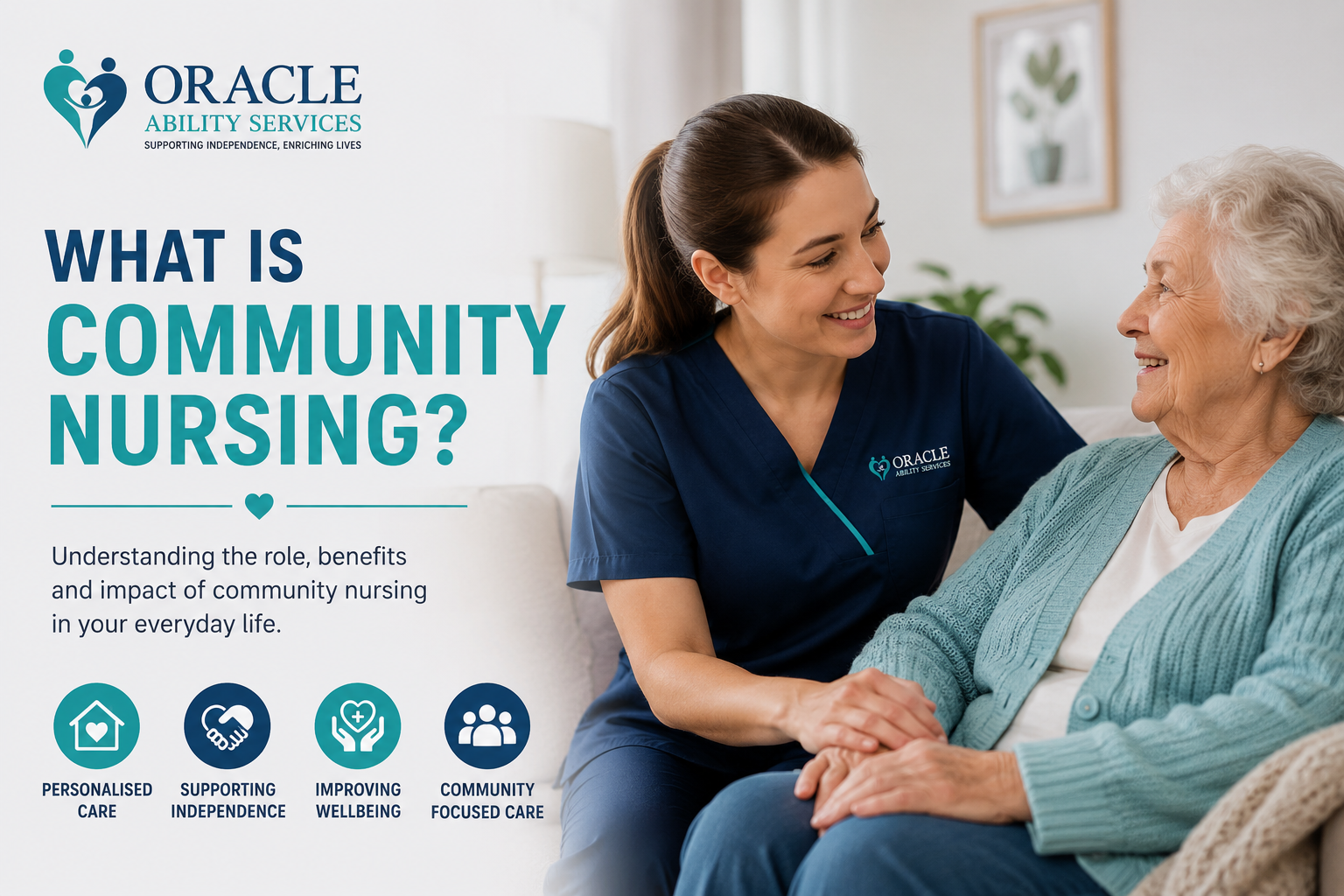
If you’ve been told a loved one needs “community nursing” but aren’t quite sure what that involves, you’re not alone. It’s one of those healthcare terms that gets used often but explained rarely. So what is community nursing, exactly, and how is it different from the nursing care you’d receive in a hospital?
In short, community nursing is professional nursing care delivered outside of a hospital setting, most often in a person’s own home. It covers everything from wound care and medication management to chronic disease monitoring and post-surgical recovery, all provided by qualified Registered Nurses who come to you rather than the other way around.
This guide walks through what community nursing actually involves, who it’s for, how it connects with NDIS funding, and the real benefits it offers over hospital-based or clinic-based care.
Quick Answer: Community nursing is clinical care delivered by a Registered Nurse outside of a hospital, most often at home. It covers wound care, medication management, chronic disease monitoring, and more, funded through Medicare, DVA, NDIS, or arranged privately.
Definition
What Is Community Nursing in Australia?
Community nursing care refers to clinical nursing services delivered in the community, typically in a person’s home, rather than in a hospital ward or medical clinic. In Australia, community nursing sits alongside the hospital system as a way to manage health conditions without requiring an admission, or to support someone as they recover after being discharged.
It’s a broad category that includes:
- Acute community nursing: short-term care, often following surgery or a hospital stay
- Chronic disease nursing: ongoing management of conditions like diabetes, heart disease, or COPD
- Palliative community nursing: comfort-focused care for people at the end of life
- Disability and aged care nursing: clinical support for people with disability or older Australians who want to remain independent
Community nursing is delivered by a mix of providers, including government-funded programs, not-for-profit organisations, and private nursing services, so access varies depending on where you live and what funding you have available.
The Role
What Does a Community Nurse Do?
A community nurse is a Registered Nurse who provides clinical care outside a hospital, most commonly in a client’s home. The role is broader than many people expect. On any given day, a community nurse might:
| Task | What It Involves |
| Wound care | Assessing, dressing, and monitoring wounds through to healing |
| Medication management | Administering, organising, and monitoring medications |
| Health monitoring | Checking vital signs, blood glucose, and general condition |
| Continence and catheter care | Managing continence needs and catheter maintenance |
| Chronic disease support | Monitoring symptoms and coordinating care with a GP |
| Client education | Teaching clients and families how to manage care between visits |
| Clinical documentation | Recording progress and reporting back to the treating doctor |
Beyond the hands-on clinical work, community nursing services also play a coordination role. A community nurse is often the person who notices early signs of deterioration, flags concerns to a GP, and keeps the whole care team informed, something that’s much harder to achieve when care is split across multiple disconnected appointments.
“A community nurse often becomes the one constant in a person’s care, the single point of continuity that hospital shift rotations simply can’t offer.”
Home Care
Community Nursing at Home: How It Works
Home community nursing simply means the nurse comes to the client rather than the client travelling to a clinic. For anyone managing a chronic illness, recovering from surgery, or living with disability or reduced mobility, this shift matters more than it might sound.
Here’s what a typical home visit usually looks like:
- The nurse arrives at an agreed time, with the equipment and supplies needed for that visit
- Care is delivered based on the client’s individual plan, whether that’s a dressing change, medication round, or health check
- The visit is documented, capturing progress against the client’s care goals
- Findings are reported back to the client’s GP or care team where relevant
- The next visit is scheduled according to the ongoing care plan
Community nursing at home removes the burden of travel, reduces exposure to hospital-acquired infections, and lets clients receive care in a setting where they’re naturally more comfortable, all of which tends to support better recovery outcomes.
Who Needs Community Nursing?
Community nursing isn’t limited to any one group. People who typically benefit include:
- Older adults: managing chronic conditions or recovering from a hospital stay
- People with disability: needing ongoing clinical support connected to their disability
- Post-surgical patients: requiring wound checks or medication management at home
- Palliative care clients: who wish to remain at home with dignity and comfort
- Veterans: accessing DVA-funded nursing support for service-related or general health needs
- Anyone with a GP-identified need: where care is easier to manage at home than through repeat clinic visits
NDIS Funding
Is Community Nursing Covered by NDIS?
Yes, in many cases. NDIS community nursing is available to participants whose disability creates health needs that require a nurse’s clinical skills, rather than the support of a general care worker. This might include wound care, catheter care, complex medication management, or ongoing monitoring of a health condition connected to the participant’s disability.
How NDIS Community Nursing Works
Community nursing for NDIS participants is usually funded under Core Supports or Capacity Building, depending on the individual’s plan. Funding is approved when the nursing support is assessed as reasonable and necessary in relation to the participant’s disability, rather than for general health needs unrelated to it.
It’s worth understanding the distinction between a support worker and a community nurse under an NDIS plan. Support workers assist with daily living tasks, while a community nurse is an AHPRA-registered clinician who can legally perform medical procedures and clinical assessments. Both roles often work together, but only one of them is community nursing in the clinical sense.
Comparison
Community Nursing vs Hospital Nursing: What’s the Difference?
Both involve qualified nurses, but the setting and structure of care are quite different:
| Hospital Nursing | Community Nursing | |
| Location | Hospital ward | Client’s home or the community |
| Supervision | Continuous, round-the-clock | Scheduled visits |
| Environment | Clinical, shared with other patients | Familiar, private, own home |
| Continuity | Rotating shifts and staff | Often the same nurse or small team |
| Best suited for | Acute, high-risk medical situations | Stable conditions manageable outside hospital |
Neither replaces the other. Hospital nursing exists for situations that genuinely need continuous medical oversight, while community nursing picks up once that level of supervision is no longer necessary, keeping recovery and ongoing care moving without an extended hospital stay.
Why It Matters
Benefits of Community Nursing
Choosing care at home over hospital or clinic-based alternatives comes with real, measurable advantages:
- Continuity of care: the same nurse or small team gets to know the client’s history, reducing the risk of things being missed
- Reduced hospital readmissions: early detection of complications at home often prevents a return trip to hospital
- Comfort and independence: clients recover and manage conditions in a familiar environment, on their own terms
- Lower infection risk: avoiding hospital environments reduces exposure to hospital-acquired infections
- Family involvement: family members can be present, informed, and taught how to support care between visits
- Cost efficiency: for many conditions, community nursing is a more affordable alternative to extended hospital stays
For people managing chronic or complex conditions, these benefits compound over time. Consistent, community-based care tends to catch problems earlier and keep people living independently for longer than intermittent hospital or clinic visits alone.
FAQ
Frequently Asked Questions
What does a community nurse do?
A community nurse delivers clinical care outside a hospital, including wound care, medication management, health monitoring, and coordination with a client’s GP or care team.
Who can access community nursing?
Anyone with a clinical need that can be managed outside hospital, including older adults, people with disability, post-surgical patients, and those receiving palliative care.
What services does community nursing provide?
Wound care, medication management, continence and catheter care, chronic disease monitoring, palliative support, and health education, all delivered in the client’s home.
Can community nursing be provided at home?
Yes. Most community nursing is delivered in a client’s home, which is why it’s often called home community nursing or in-home nursing care.
Is community nursing covered by NDIS?
Yes, when the nursing need relates directly to a participant’s disability. Funding usually sits under Core Supports or Capacity Building in the NDIS plan.
How does NDIS community nursing work?
A Registered Nurse delivers clinical care funded through the participant’s NDIS plan, working alongside support coordinators and any allied health professionals involved.
What is the difference between community nursing and hospital nursing?
Hospital nursing happens on a ward with round-the-clock medical backup. Community nursing is delivered at home or in the community, with scheduled visits instead of continuous supervision.
Related Services
Explore Our Community Nursing Services
- DVA Community Nursing: funded nursing support for eligible veteran card holders
- NDIS Community Nursing: clinical nursing care connected to your disability support needs
- Wound Care Management: specialised dressing, monitoring, and healing support at home
- Private Nursing Services: fast, flexible nursing care without a referral or waitlist
Next Steps
Get Community Nursing Support at Home
If you’ve been asking what is community nursing and whether it’s right for your family, the next step is simple. Oracle Ability Services provides community nursing across Adelaide, whether through DVA, NDIS, or a private arrangement, delivered by experienced Registered Nurses who genuinely care about getting it right.
[Get in touch with our team] [Explore our services]
